Buying vacant land in Nova Scotia involves finding a suitable parcel, confirming zoning and road access, and understanding local taxes. Nova Scotia continues to attract buyers looking for space, coastal living, and long-term property opportunities. Many buyers are attracted to vacant land because it offers flexibility. You can build a home, develop a cottage, or hold the property as a long-term investment.
However, vacant land often requires additional planning. Buyers must confirm whether the lot can support key services such as wells, septic systems, and electrical connections. Development costs can vary depending on location and infrastructure availability.
Key Takeaways
- Land can look perfect, but still be hard to use, so confirm the basics before you commit.
- The most important checks are zoning, legal road access, boundaries, and water and septic feasibility.
- Taxes and closing costs can vary by location, so always confirm local deed transfer tax and ongoing property taxes early.
- Non-residents may face extra rules and taxes, so it’s worth reviewing your situation with a lawyer before you firm up.
- A careful condition period is your best protection when buying vacant land.
The Nova Scotia Property Market in 2026
Nova Scotia’s real estate market is still strong, but the market feels more balanced now. Prices rose quickly after 2020, and while the pace has slowed, they have not dropped significantly.
An example is the province-wide average sale price, which reached $491,129 in January 2026. That is up 11.3% from $441,429 in January 2025. Prices also fluctuated throughout 2025. They climbed in the spring and summer, dipped a bit in the fall, then jumped again at the start of 2026.
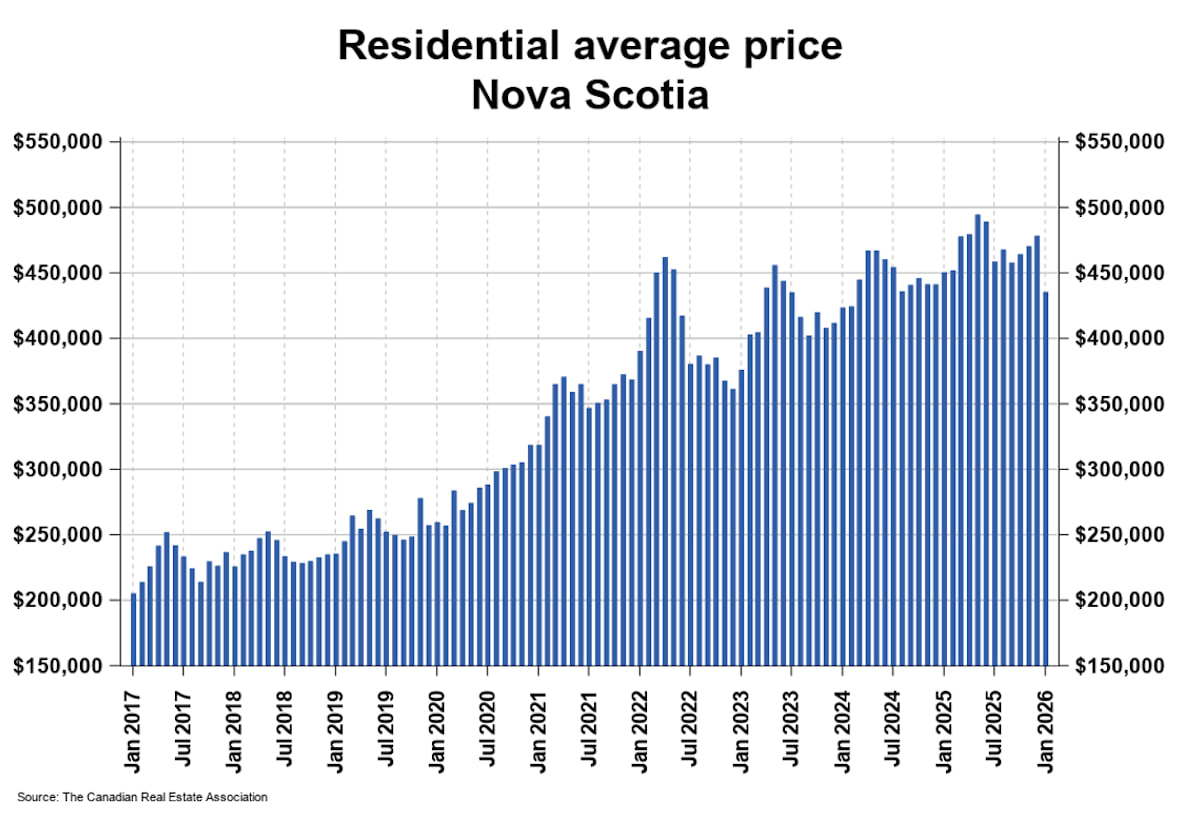
Source: Crea Statistics
For land buyers, the main takeaway is that the best lots still get attention. Land with legal access, the right zoning, and realistic servicing options (like power, well, and septic) is usually more attractive than a cheaper lot with big unknowns.
How to Buy Land in Nova Scotia
Buying vacant land is similar to buying a home, but due diligence matters more. Here’s the simple process.
Step 1: Pick your area and goal
Decide where you want to buy and what you want to use the land for (home, cottage, future build, or holding land). Different areas have different rules and costs.
Step 2: Check zoning and basic rules
Contact the municipality to confirm zoning and what is allowed. Zoning affects what you can build, where you can place it, and what permits you may need.
Step 3: Make an offer with conditions
Include conditions that give you time to confirm the land is usable. This is where you check legal access, boundaries, and service options.
Step 4: Close with a real estate lawyer
Your lawyer completes the title search, reviews restrictions and easements, prepares documents, and registers the transfer of ownership.
A Quick Checklist Before You Buy Land in Nova Scotia
When planning to buy land in Nova Scotia, several checks can help ensure the property meets your goals.
Zoning and permits
Municipal zoning regulations determine whether the property can support a home, cottage, or other structures. Buyers should confirm their intended use is allowed before closing.
Survey and boundaries
A survey helps you understand the lot lines and the land’s shape. It can also help you plan a driveway, septic field, and building site. Some buyers do this before closing, others after closing, depending on their needs.
Driveway and road access
Legal access is important. If a lot is landlocked, it can be difficult to use and develop. If the lot does not connect to a public road, your lawyer can help check whether any right-of-way is registered.
Water and septic systems
Rural properties often require a drilled well and septic system. Buyers should verify whether the land can support these systems.
Environmental features
Wetlands, watercourses, and coastal setbacks can affect development plans and the placement of buildings.
Non-residents and Foreign Buyers in 2026
Non-resident buyers may have extra costs and rules in Nova Scotia. On some qualifying purchases, the province charges a 10% Non-resident Provincial Deed Transfer Tax for agreements signed after March 31, 2025. This can be in addition to the municipal deed transfer tax (DTT) and any applicable federal rules.
Canada’s foreign buyer ban on residential property has been extended until January 1, 2027.
Non-resident buyers should confirm how the rules apply to the exact property type they want to purchase.
Because eligibility depends on your residency and the type of property, it’s best to speak with a real estate lawyer to confirm any federal exemptions.
Faqs About Buying Land in Nova Scotia
How much is the land transfer tax in Nova Scotia?
In Nova Scotia, “land transfer tax” usually refers to the municipal Deed Transfer Tax (DTT). Each municipality sets the rate, which can range from 0.5% to 1.5% of the purchase price. Buyers should confirm the current rate with the local municipality.
How much is property tax in Nova Scotia?
Property tax rates vary across the province. Each municipality sets its own tax rate, which is applied to the property’s assessed value. The assessed value is determined by Property Valuation Services Corporation (PVSC).
Can you buy Crown land in Nova Scotia?
Crown land is rarely sold in Nova Scotia. Most Crown land is managed for public use, conservation, or resource management. In limited situations, the province may consider applications to purchase Crown land.
Can you buy land on Oak Island, Nova Scotia?
Yes, but only if privately owned parcels are listed for sale. Most of Oak Island is privately owned, and available properties are limited. Buyers should confirm zoning, access, and restrictions before purchasing.
Buying Land in Nova Scotia
Buying land in Nova Scotia can be a great move, whether you’re planning to build soon or hold the land for later. The key is to focus on zoning, legal access, boundaries, and water and septic feasibility. Once those basics are clear, it’s easier to budget for taxes and closing costs and move forward with confidence.
If you’re not sure where to start, a local REMAX agent can help you compare lots, flag common red flags, and connect you with the right professionals so you can make a well-informed purchase.