
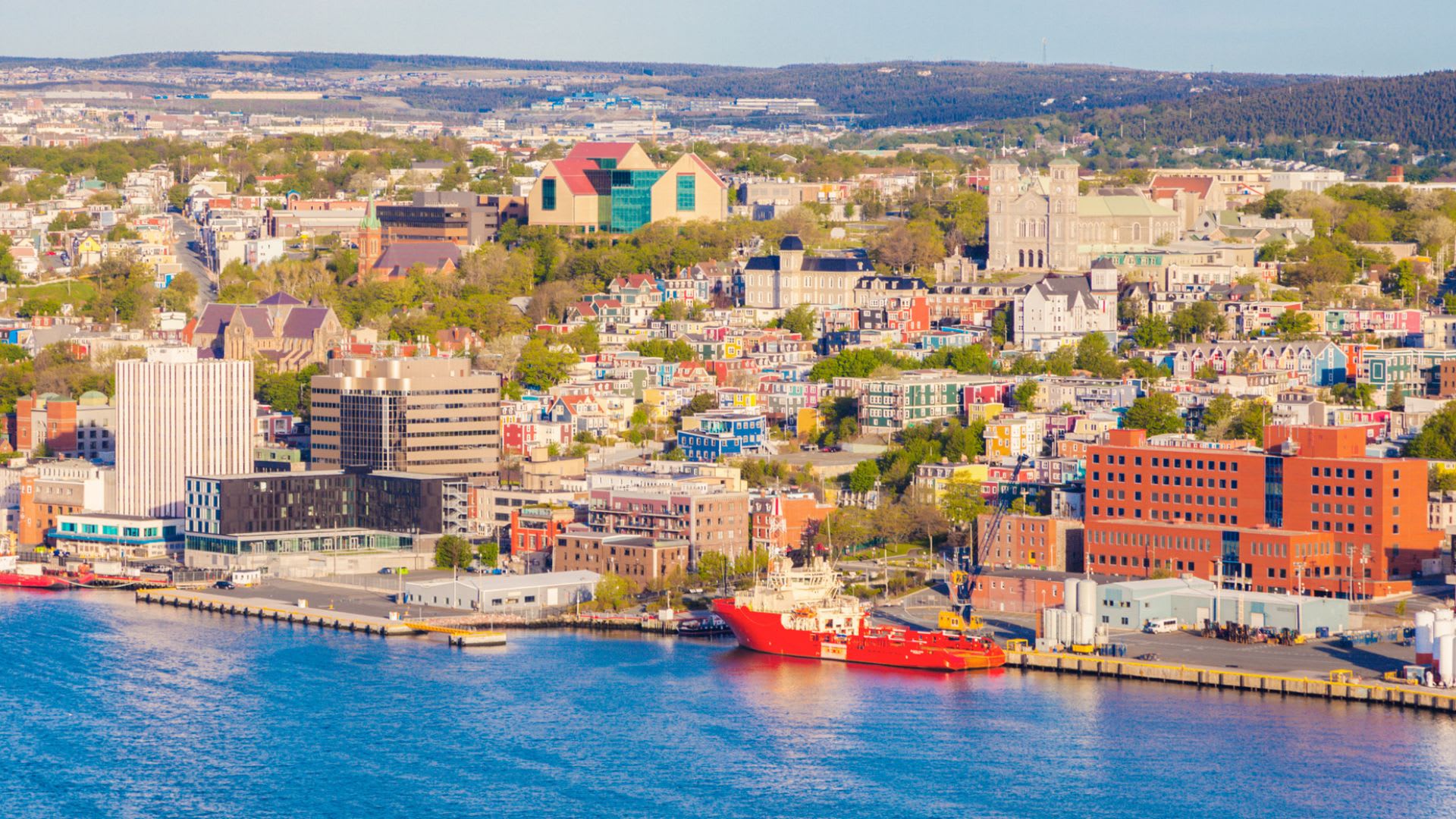


An expected infusion of nearly $63 billion in military investment and major infrastructure spending throughout Canada over the next 10 years has further strengthened buyer sentiment and demand for commercial real estate across the Halifax Regional Municipality (HRM).

The news has had significant impact on the rapidly growing Halifax area at a time when geopolitical tensions, tariff uncertainty and interest rate stability have continued to weigh on broader markets. In addition to the purchase of a 192-hectare waterfront industrial site and a 140-unit apartment complex, the federal government investment will also upgrade systems at the HMC Dockyard and Stadacona and provide funds for a new Combatant Training and Integration Centre.

Overall investment trends have been up in the city, with the most recent Altus Group report on Canadian CRE Investment Trends reporting Halifax is now one of the top three preferred markets for investors across all asset classes, surpassing Vancouver to secure the top position in investor interest. Demand has remained strongest for suburban multi-unit residential, multi-tenant industrial and food-anchored retail strips.

National market continues to evolve

REMAX Canada’s national 2026 Commercial Real Estate Report examined first-quarter activity across 12 major Canadian markets and found that the commercial property market has continued to evolve with improved absorption, particularly in the office sector, where return-to-office mandates are supporting increased leasing activity in premium space. Industrial demand has remained durable nationwide, with inventory challenges persisting. Retail fundamentals have continued to outperform expectations, supported by population growth and infrastructure investment, reinforcing long-term demand. While capital deployment has been measured in most markets analyzed, improving financial conditions have prompted renewed interest in well-located, income-producing assets.

Population growth reshapes housing mix in Halifax

Strong immigration and in-migration throughout the pandemic placed palpable pressure on the city’s housing stock. Over the five-year period, population in the Halifax CMA increased by 15 per cent, rising to almost 550,000 residents, according to Statistics Canada’s Annual Demographic Estimates: Census Metropolitan Areas and Census Agglomeration. The city experienced a substantial shift to high-density construction as the market geared up to accommodate the influx. A record 14,000 units are currently under construction, with rentals accounting for 80 per cent of the total; the vast majority are apartments, followed to a lesser extent by townhomes and single-family housing.

While the market currently has an oversupply of rental product, according to the Canada Mortgage and Housing Corp.’s 2025 Rental Market Report, vacancy rates for purpose-built two-bedroom rentals hovered at 2.7 per cent. Despite the uptick in vacancy rates, apartment values continued to climb, up close to six per cent year over year, with some pundits saying that the increase in inventory will only address half the current shortage of inventory. Landlords in buildings with unoccupied units have been turning to incentives, such as free parking or Internet, to attract buyers that are leasing for longer periods of 18 to 24 months.

Thousands of new jobs recently created by economic investment in the city are expected to continue drawing migration to Halifax in the coming years, with absorption expected to climb as a result. While the cap on international students has led to a notable decline in demand for rental product last year, recent changes to the program show some easing of restrictions, which could bring about an increase in acceptance rates and an uptick in demand.

REITs and institutional investors have continued to favour Halifax, given its strong potential for growth. Major acquisitions made in late 2025/2026 include the acquisition of a 109-unit building in Clayton Park valued at $29.6 million and the purchase by Eventide Development of a 55-unit downtown Halifax for $36 million that is scheduled for completion in 2026.

Some office-to-residential conversions are underway in the city, with non-profits gobbling up older, existing low- to mid-rise housing stock, with a focus on maintaining lower rents. Build Canada for non- profits is helping interested parties locally, provincially and nationally to acquire buildings throughout the area. Bedford West and Sackville are currently the most popular area for conversions, with lower land values and lease rates per door.

Office availability rates tick downward as absorption climbs

The shift toward office-to-residential conversions in buildings, including the Centennial and Freemason, in the downtown core has further reduced supply, removing thousands of square feet of office space from the market. That, alongside increased absorption, have brought availability rates down to 7.7 per cent in the fourth quarter of 2025, as reported by Altus Group, down from 11.3 per cent during the same period in 2024.

A-class office buildings in the city’s vibrant core have continued to perform well, driven by steady demand from law firms, tech firms, and newly established businesses seeking between 2,000 to 3,000 sq. ft., as well as larger spaces 5,000 to 10,000 sq. ft., depending on organizational scale. In contrast, older B- and C-class buildings have experienced tenant erosion, largely due to high operational costs, despite on-going investments to improve building quality and space.

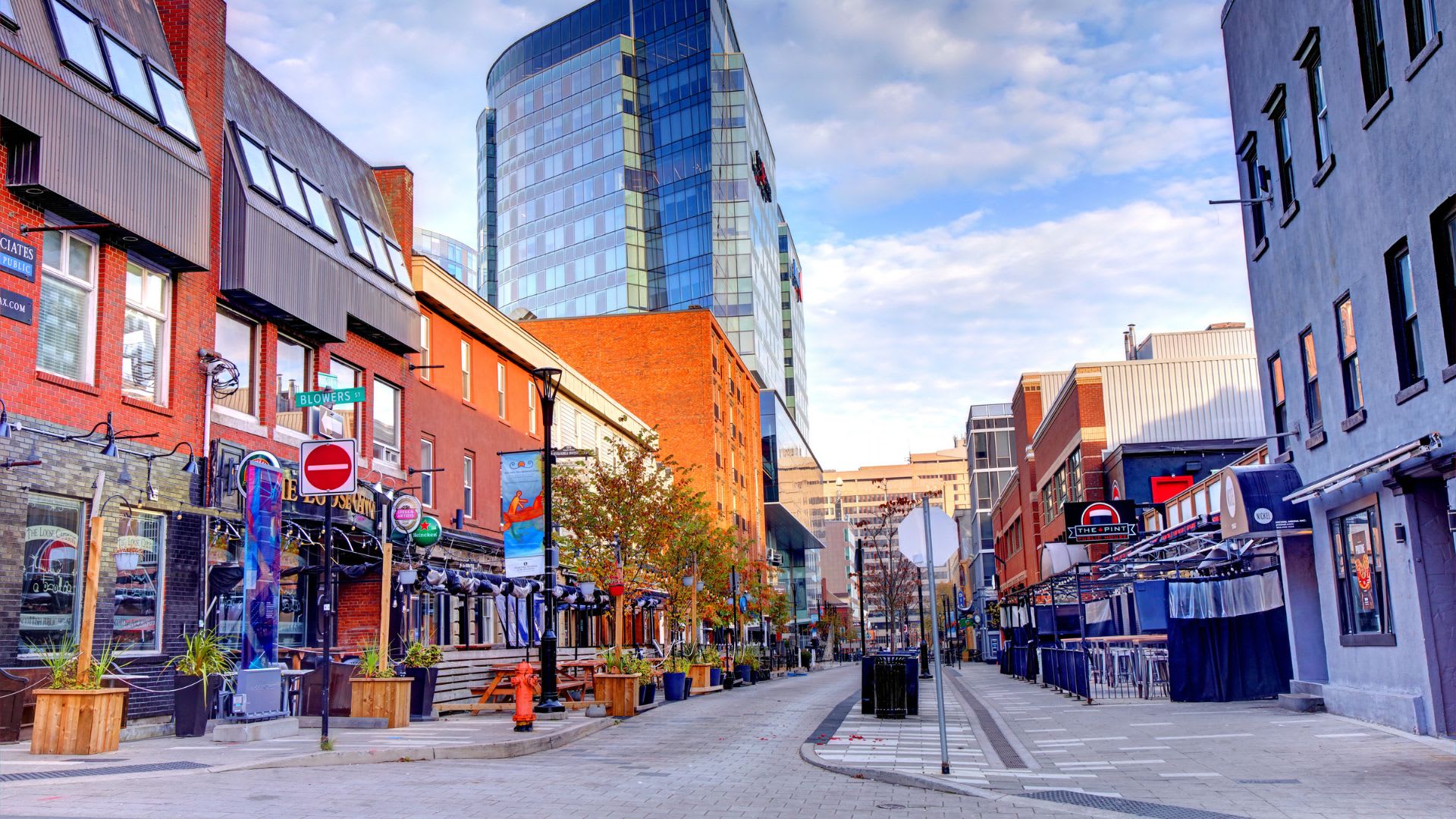
Mixed-use projects have also become increasingly popular in the Halifax Regional Municipalities core areas combining residential rentals and condominium buildings with main-floor retail. Some of the newer residential inventory is breathtaking, with amenity-rich buildings such as the The Roy and Maple in downtown Halifax and Kevel in Dartmouth. Spring Garden, one of the city’s premier shopping areas, now offers an even greater selection of restaurants, cafes and trendy boutiques. Skye Halifax, which is currently under construction, will feature multi-use residential, retail and a luxury hotel component.

A vibrant travel and tourism sector has continued to underpin the strength of the HRM’s hospitality sector. Several hotel brands have established a presence in the city core in recent years, while some of the existing hotel inventory has undergone repositioning and renovation. Notably, Hotel Halifax was rebranded as the Delta Hotel by Marriott following a major renovation completed in February 2026. Additional changes include the relocation of Casino Nova Scotia from the downtown waterfront to Dartmouth Crossing, a location that offers improved highway access and parking. The move will also free up prime waterfront real estate for future development. Completion of the new casino is scheduled for 2029, with the existing facility expected to remain fully operational until that time.

Industrial expansion meets new supply pressures

Preferred industrial space within the Burnside Industrial Park has remained tight with vacancy rates hovering between five and six per cent. However, the Bayers Lake Industrial Centre, a zero-carbon development, had continued to be a drag on overall availability rates, with a double-digit vacancy of close to 60 per cent. The introduction of two large flexspace projects brought a further 600,000 sq. ft. to Halifax’s small industrial market. The move pushed availability levels to 12.2 per cent in the fourth quarter of 2025, according to Altus Group, up from 9.1 per cent during the same period one year earlier.

Most industrial tenants have been seeking flex-space ranging in size from 2,000 to 6,000 sq. ft. in the Burnside Industrial Park. Requirements for tenants in manufacturing, and to a lesser extent export and shipping include high ceilings between 18 and 24 ft. and easy access to the airport and transportation routes. The industrial park is set to expand, with the site ready to go, pads in place, and a sign-off required. Between four and five million square feet will become available in the second and third phases, which span more than 100 acres.

Given the country’s large commitment to military spending, significant investment in infrastructure spending is expected to occur. Large suppliers are coming to the city, with Amazon, for example, seeking to set up operations in a substantial facility. The aerospace industry including Lougheed and Pratt and Whitney is looking to expand operations. Smaller owner-occupied businesses such as local manufacturing export/import and trade shops, tend to require square footage ranging from 20,000 to 40,000 sq. ft., with locations close to railways, bays and drive-up dock levels, while big space end-users tend to need approximately 50,000 to 100,000 sq. ft., but inventory levels are limited.

Land constraints reshape development strategy

With available land increasingly earmarked for residential development, opportunities across other asset classes have diminished. As a result, developers and owner-occupiers have been pursuing alternative strategies, including the acquisition and repositioning of existing assets to meet their evolving needs. This trend has been particularly evident in the industrial and mixed-use sectors, where demand for well-located, serviced sites has continued to outpace supply.

The city is looking to fast-track the Ragged Lake Business Park in the western region of Greater Halifax and the South Shore. Environmental studies are currently underway, and the business park’s Industrial Reserve is being designated for serviced development to accommodate industrial, office and employment-supportive uses over the next decade, according to the Halifax Municipal government website. The area is already home to the recently expanded Ragged Lake Transit Centre.

The HRM is expected to see a more stable year in 2026 as infrastructure investment begins to take hold and existing supply is gradually absorbed, setting the stage for stronger momentum ahead. As confidence improves investors and developers will be hard-pressed to remain on the sidelines, with a shift underway toward income producing assets. By 2027, expansion is anticipated, led by industrial growth, while retail continues to be supported by both local demand and a resilient tourism sector. Absorption in the multi-unit residential market should pick up, with conditions tightening over time. Increased foreign investment, renewed interest in onshore and offshore energy and strengthening trade relationships with Europe and Africa position Halifax and Atlantic Canada to play a more central role going forward.

Share This Story, Choose Your Platform!

Find the Right Agent

Sign up For Our Newsletter

This field is for validation purposes and should be left unchanged.
This field is hidden when viewing the form

Next Steps: Sync an Email Add-On

To get the most out of your form, we suggest that you sync this form with an email add-on. To learn more about your email add-on options, visit the following page (https://www.gravityforms.com/the-8-best-email-plugins-for-wordpress-in-2020/). Important: Delete this tip before you publish the form.
Untitled(Required)

*RE/MAX, LLC, 5075 S. Syracuse St., Denver CO, 80237; RE/MAX Western Canada and RE/MAX Ontario-Atlantic, 639 Queen Street West, Toronto, ON M5V 2B7, 905-542-2400