
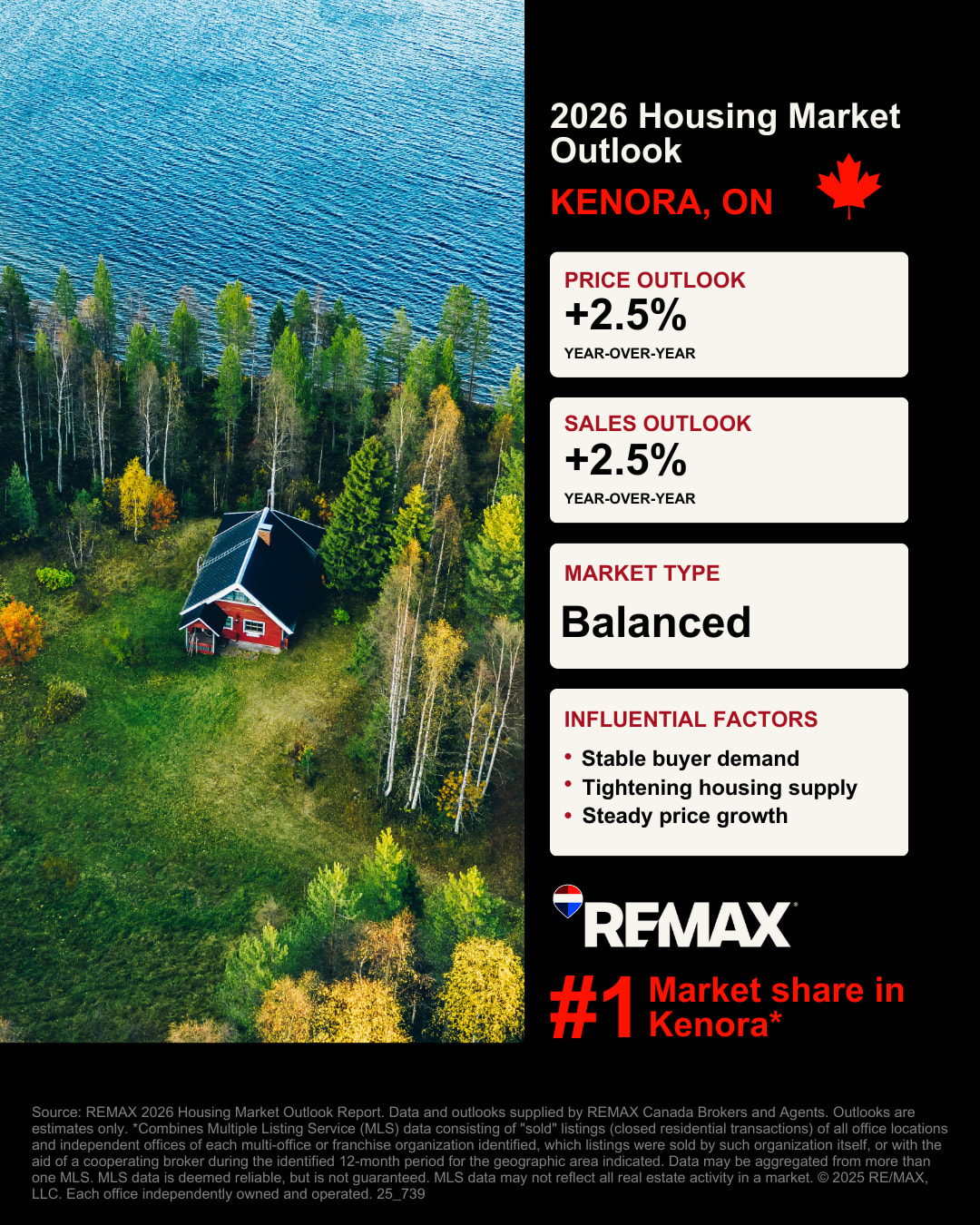
The average residential sale price in Kenora has increased by 5.4 per cent across all property types between 2024 and 2025 from $489,028 to $515,566. The number of sales transactions increased by 13.7 per cent for the same time period (from 204 to 232). The total number of listings decreased by 7.4 per cent (from 363 in 2024 to 338 in 2025). Average residential sale prices will rise by 2.5 per cent going into 2026, compared to 2025. Sales are anticipated to rise by 2.5 per cent going into 2026, compared to 2025.
Trends in the Ottawa Housing Market
Looking ahead to 2026, Kenora is expected to be a balanced market due to relatively even levels of supply and demand. Inventory levels are sufficient to provide buyers with options, while steady interest from first-time and move-up buyers supports consistent sales activity. As of Fall 2025, the local housing market has remained stable without experiencing a steep decline as other regions have. This suggests that the Kenora market is resilient and will pick up in 2026, supported by steady demand, even amid broader economic uncertainty.
Limited rental availability coupled with rising rental prices are encouraging more people, particularly first-time buyers, to consider purchasing a home rather than continuing to rent. At the same time, steady overall rental demand continues to attract investor interest in multi-family properties, as these assets offer opportunities for stable returns and the ability to meet ongoing housing needs. Together, these trends are reinforcing activity in their respective market segments. 2026 will be a strategic year to buy in Kenora. With the market experiencing steady annual price increases, entering sooner rather than later will enable buyers to take advantage of current conditions and avoid paying higher prices in the future.
Declining interest rates are also expected to support the region. Barring any significant rate increases, the first half of the year is anticipated to remain consistent as it was in 2025, characterized by a strong, balanced market. Both buyers and sellers can expect favourable conditions, with no major disruptions to pricing or inventory levels during this period.
The most important factor affecting the local housing market is the combination of rising demand from new Canadians and a long period of limited new construction. The influx of buyers has increased competition for existing homes, while the lack of new supply has kept inventory levels tight, placing upward pressure on prices. Looking ahead to 2026, these dynamics are expected to continue, with the market remaining competitive for buyers. Notable segments to watch include luxury properties, which continue to attract strong interest, and the rental market, where demand remains high due to limited new housing options.
Policy measures are not expected to have a significant impact on the local market in 2026. The local market has generally remained steady, maintaining consistent activity over time. In 2025, however, there was a notable increase in home prices, accompanied by higher spending among first-time buyers. These trends suggest a more active and competitive environment, particularly for entry-level purchasers.