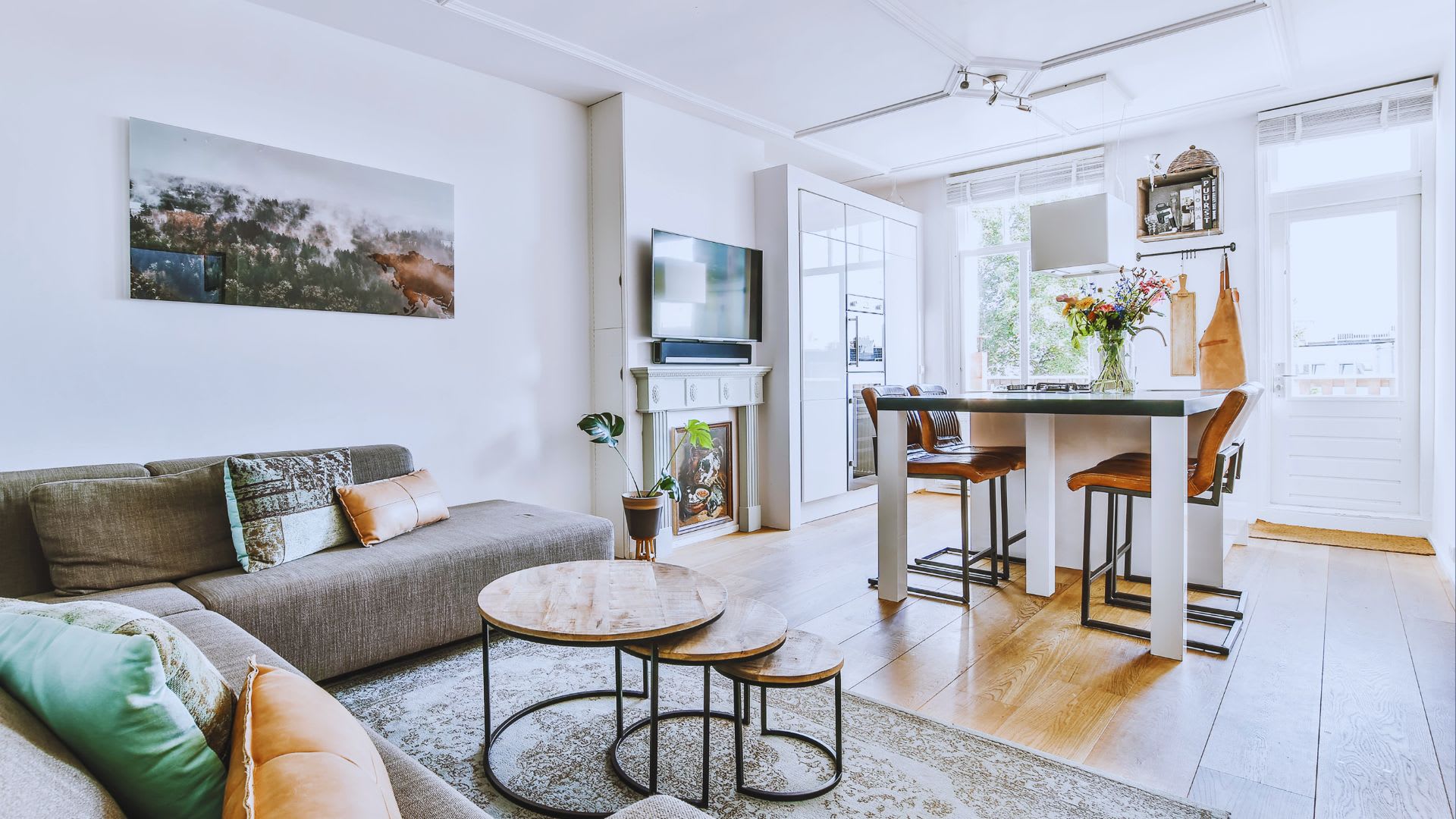
A coffee table sits at the visual centre of most living rooms, which makes it one of the first surfaces a buyer registers after they clear the entryway. It also turns up in listing photography more often than almost any other horizontal surface in the house.
Styling that table is close to free. It takes about fifteen minutes, it rarely requires buying anything, and it changes how the entire room reads on camera.
What the living room is doing for your listing
Staging works by getting a buyer to picture their own furniture and their own routine in a space that currently belongs to somebody else. The living room carries an outsized share of that work, because it is the room where buyers slow down and start forming an opinion.
A table buried under mail reads as a storage problem. A completely bare table reads as a vacant rental. Three or four deliberate objects read as a home somebody looks after. That last one is the target.
Room-by-room prep is covered in these tips for staging your home.
Nine coffee table styling ideas that hold up on camera
The aim is a surface that looks composed rather than decorated. Books, height and light do most of the work. Everything below assumes the table is already cleared.
A decorative tray
The tray is the most useful object here and the reason to start with it. It draws a border around the grouping, stops small items from drifting toward the edges and gives the arrangement one clean line in photos. It also makes resetting fast, since the whole display lifts off in a single motion when a showing gets booked on short notice.
Coffee table books
Two or three hardcovers in a stack add height and a horizontal line that balances taller pieces. Architecture, travel, design and photography are safe subjects. Titles tied to politics, religion or a specific fandom pull a buyer’s attention toward the current owner, which is the opposite of what staging is for.
Pottery and ceramic vessels
Vases and vessels add height without much visual noise. Two pieces at different heights usually work better than a matched pair. Leave them empty or add a small plant. Skip anything with a glaze colour loud enough to fight the sofa or the rug, since neutral tones photograph more predictably under mixed lighting.
Greenery
Live greenery signals upkeep, and buyers tend to read upkeep as a well-maintained home. A trailing plant or a cluster of succulents photographs better than an oversized bouquet. Cut flowers need replacing every few days across an active listing, so a hardy plant is the lower-maintenance option for sellers still living in the home.
Vintage glass
Cut glass and coloured glass catch light, which helps a living room with one window read brighter both in photos and in person. A single piece is often enough on a smaller table. A glass bowl can hold citrus or matchbooks, or stay empty and work as a sculptural object on its own.
Tapered candles
Candles introduce vertical lines to a surface that is otherwise all horizontal. Grouped in odd numbers at staggered heights, they are the quickest way to make a flat table look intentional. Leave them unlit. An open flame is a liability with strangers moving through the house, and scent is a gamble with buyers who have sensitivities.
A sculptural object
One sculptural piece is usually what separates a styled table from a tidied one. Bust reproductions, abstract forms and carved wood shapes all do the same job. Watch the scale. Anything tall enough to interrupt the sightline across the room works against the photo it is meant to improve.
Stone or marble coasters
Coasters are rare among staging props in that they are decorative and functional at once. A stacked set in one corner of the table fills space at low height and quietly signals that the surface gets used. They also protect the finish while the house is open, which matters on a wood or stone top.
A game board
A chess or backgammon board suggests the room gets used for something other than a screen. It works best on a large rectangular table with space to spare on either side, and it takes over a small one. Set the pieces mid-game rather than in their starting rows so the board reads as lived-in.
Five steps to build the display
- Clear the surface completely. Every remote, charger, coaster and magazine comes off before anything goes back on.
- Anchor with the tray. Set it off-centre rather than dead middle, which gives the eye a place to start.
- Group in odd numbers at varied heights. Three objects at three heights is the standard formula. A tall vessel, a medium stack of books, a low bowl.
- Leave roughly two thirds of the table open. Empty space is what separates a staged table from a decorated one. Buyers need to see the surface, not only what sits on it.
- Check the result through a camera. Shoot the table from standing height and again from the doorway. Objects that look balanced in person often crowd each other once the lens flattens them.
What to clear off before buyers arrive
- Remotes, chargers and visible cords
- Mail, paperwork and bills
- Family photos, diplomas and anything with a name on it
- Medication, vitamins and personal care items
- Valuables and anything fragile enough to worry about during an open house
- Toys, pet bowls and chew marks sitting in the sightline
- Plug-ins and diffusers, since strong scent often reads as covering something up
Depersonalizing is the step sellers resist most. It is also the step that most reliably helps a buyer place their own belongings in the room.
Getting the size of the table right
Before anything goes on top, the table itself has to suit the room. A piece that is too large eats the walkway and makes the living room photograph smaller than it measures. A piece that is too small vanishes between the sofa and the rug. The common target is a table about two thirds the length of the sofa, sitting at roughly sofa-seat height.
Nothing here requires a purchase. If the current table is oversized, blocking traffic or damaged enough to distract, borrowing a smaller piece from another room or removing it altogether is usually the better call. An open floor reads cleaner than a crowded one, which matters in condos and older urban homes where the living room doubles as a hallway.
A few working rules on proportion:
- Decor should sit below the eye level of someone seated on the sofa so conversation is not blocked
- The tallest object should measure roughly two thirds the height of the sofa back or less
- Keep about 45 cm (18 inches) of clearance between the table and surrounding furniture so walkways stay open
- A large rectangular table can carry two small groupings. A small round table should carry one
Buyers who have to sidestep furniture register the room as smaller than it is, so clearance matters as much as anything sitting on the table.
Keeping the table showing-ready
An active listing means the surface has to reset in under a minute, sometimes with an hour of notice. A few habits make that realistic:
- Keep a basket or bin nearby for remotes, mail and whatever lands on the table over the course of a day
- Photograph the finished display and keep the shot on your phone as a reset reference
- Wipe the surface before every showing, since stone and glass tops show dust and fingerprints in photos
- Replace or remove greenery the moment it starts to look tired
|
Save this one The 60-second coffee table reset A showing just got booked for this afternoon. Work the list in order and the table is camera-ready before you find your keys. ☐ Everything into the basket. Remotes, mail, chargers, mugs. ☐ Wipe the surface. Glass and stone show every fingerprint. ☐ Tray back on, set off-centre. ☐ Books, then something tall, then something low. ☐ Check the plant. Tired leaves come off. ☐ One photo from the doorway. If it looks crowded there, remove one thing. |
Winter showings add one more item to the list. Short daylight hours mean most viewings happen under lamplight, so turn on every light in the living room before buyers arrive and keep reflective pieces such as glass or polished ceramic in the grouping. Wet boots and salt also mean the floor around the table needs a check on the way out the door.
Styling the same table after you move in
Not everyone reading this is selling. A coffee table refresh is one of the fastest ways for a recent buyer to make a new living room feel settled, especially in the weeks after possession when most of the house is still in boxes. One styled surface gives the eye somewhere to land while the rest of the room catches up.
The difference is that a new owner gets to put the personality back. The framed photo, the souvenir from a trip, the stack of books nobody else would have chosen. Staging strips those out deliberately. Living in the home is when they go back on the table.
Whether staging effort pays off depends on the property and the local market, and a local agent is the right person to weigh that. A REMAX agent can walk the home, flag the rooms worth the work and point out the ones already doing their job. Start with whether staged homes sell faster, then connect with a REMAX agent near you to build a prep plan for your listing.
Frequently Asked Questions
How do you style a coffee table for a home showing?
Clear the table completely, then rebuild with three to five objects at varied heights. A tray, a short stack of books, something living and one sculptural piece covers it. Leave roughly two thirds of the surface open and remove anything personal, including photos, mail and medication.
What is the rule of thumb for coffee table size?
About two thirds the length of the sofa, at roughly sofa-seat height, with about 45 cm of clearance on the sides so walkways stay open. A table that blocks traffic makes the room photograph smaller than it measures, and removing it entirely is often better than keeping an oversized piece.
How many objects belong on a coffee table?
Three to five for most tables. Odd-numbered groupings tend to look more natural than pairs. A small round table can look crowded with more than three objects, while a large rectangular table can carry two separate groupings at either end.
Do you need to buy anything to style a coffee table for a listing?
Usually not. Most homes already have books, a bowl, a tray or a plant sitting somewhere else. Styling a coffee table is more often about editing and rearranging what is already in the house than about shopping for new decor.
Should candles be lit when buyers are in the house?
No. Unlit candles still add height and shape to a display without the risk of an open flame in a house full of strangers. Strong scent also creates problems for buyers with allergies or sensitivities.
What should never be left on a coffee table during a showing?
Remotes, chargers and cords, mail and paperwork, family photos, medication and personal care items, valuables and anything fragile. Pet bowls and toys in the sightline belong on the same list.